06 / 08 / 2026
From a torn paw pad to a bite from another dog, wounds are one of the most common reasons owners reach for first aid. Knowing how to treat a dog wound safely — and recognising when a cut needs stitches rather than home treatment — will save you unnecessary trips to the vet and help you spot the ones that genuinely need urgent care.
This guide covers treating a wound on a dog, dog cut treatment, and what to do about bites, bleeding and more specific injuries like a cut on your dog's face or a broken toe. It’s everything you need for treating a wound on a dog calmly and correctly.
How to tell how serious a wound is
Not every wound needs a vet visit, but some warning signs mean you shouldn't attempt dog cut treatment at home:- Bleeding that doesn't slow after 5 minutes of firm, direct pressure
- A wound that's deep, gaping, or exposes muscle or bone
- Heavy or repeated bleeding, such as a dog’s tongue bleeding that won't stop
- Signs of infection — heat, swelling, discharge, or a foul smell
- Your dog is unusually quiet, weak, or unwilling to put weight on a limb
How to treat a dog wound at home
For minor cuts and grazes, here's how to treat a dog wound safely:1. Stay calm and restrain gently
A dog in pain may snap even if they'd never usually bite, so approach calmly and consider a muzzle if you're at all unsure. Even a lead looped gently around the muzzle can help.2. Stop the bleeding
Apply firm, direct pressure with a clean cloth or dressing for several minutes without lifting it to check. This is the most important step in any dog cut treatment, and rushing it is the most common mistake.3. Clean the wound
Once bleeding has slowed, gently clean the area with saline solution or lukewarm water. Avoid household antiseptics unless your vet has specifically recommended one, since some are unsafe for dogs.4. Cover or leave open, depending on the wound
Small, clean cuts often heal better left uncovered so they can breathe. Larger or dirtier wounds usually benefit from a clean, breathable dressing, but any bandage that isn't checked and changed regularly can do more harm than good.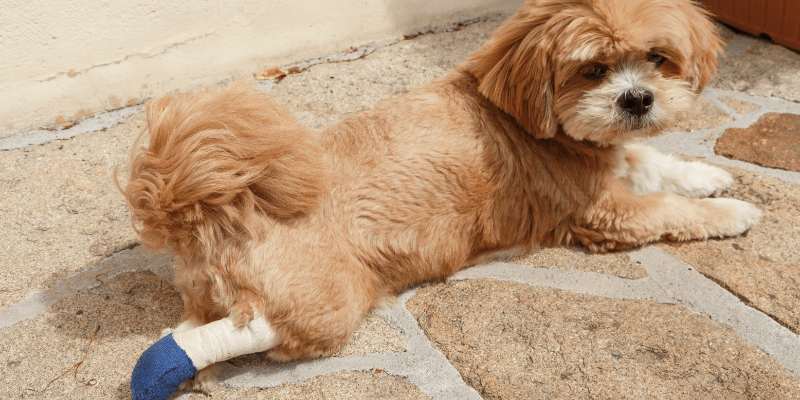
Treating specific types of wound
Dog bites
Dog bite first aid starts the same way as any wound: stop the bleeding, then clean gently. Bite wounds carry a higher infection risk than a simple cut because of bacteria in the mouth, so even a small puncture is worth a vet check. The same first aid of dog bite principles apply whether the bite came from another dog or a different animal.A cut on your dog's face
A cut on dog’s face can look alarming because of how much facial skin bleeds, even from a minor wound. Apply gentle, direct pressure, keep your dog calm to avoid further self-injury from pawing at the area, and get it checked if it's anywhere near the eye.Tongue and mouth bleeding
A dog’s tongue bleeding is common after chewing something sharp, and it can look far worse than it is because saliva spreads the blood around. Offer a clean, cold, damp cloth to bite down on gently, and seek veterinary advice if the bleeding hasn't eased within 10 minutes.Broken toes and nails
Dog broken toe treatment starts with keeping your dog off the affected foot as much as possible and applying a light, padded dressing if there's bleeding. A broken toe or torn nail can look minor but is genuinely painful, and it usually needs a vet check to rule out a fracture.What not to do
- Don't use human antiseptics, creams or plasters not specifically recommended for dogs.
- Don't remove an object that's embedded in a wound, stabilise it and get to a vet.
- Don't let your dog lick a fresh wound repeatedly, it can introduce bacteria and delay healing.
- Don't assume a wound is minor just because the bleeding has stopped, infection can set in days later.
Whether you're dealing with any of the above, the underlying principles are the same: stop the bleeding, clean gently, and know when it's beyond home treatment. And whatever the injury, knowing how to treat a dog wound properly from the start makes recovery smoother.
Build real confidence for moments like this
Reading through the steps above is a good foundation but treating a wound on a dog calmly and correctly under pressure comes far more easily with practice. Our Canine First Aid Webinar covers wound care and bandaging in full, hands-on detail, along with choking, CPR and shock, in a practical two-hour session designed for dog owners and animal professionals alike.Want to build the hands-on skills and confidence to handle a real emergency? Enquire about our dog first aid course today.
This guide is part of our complete Dog First Aid: The Complete Guide series. Read the full guide for an overview of every canine emergency, or explore the other guides in the series for choking, CPR, and shock.
Have questions? Call our team on 01202 006 040 or reach out to them online here. Alternatively, click below to view the course page in more detail.
.jpg)